Council struggling to deal with highways correspondence as more residents use AI tools
By Deborah Price - Local Democracy Reporter 20th Nov 2026
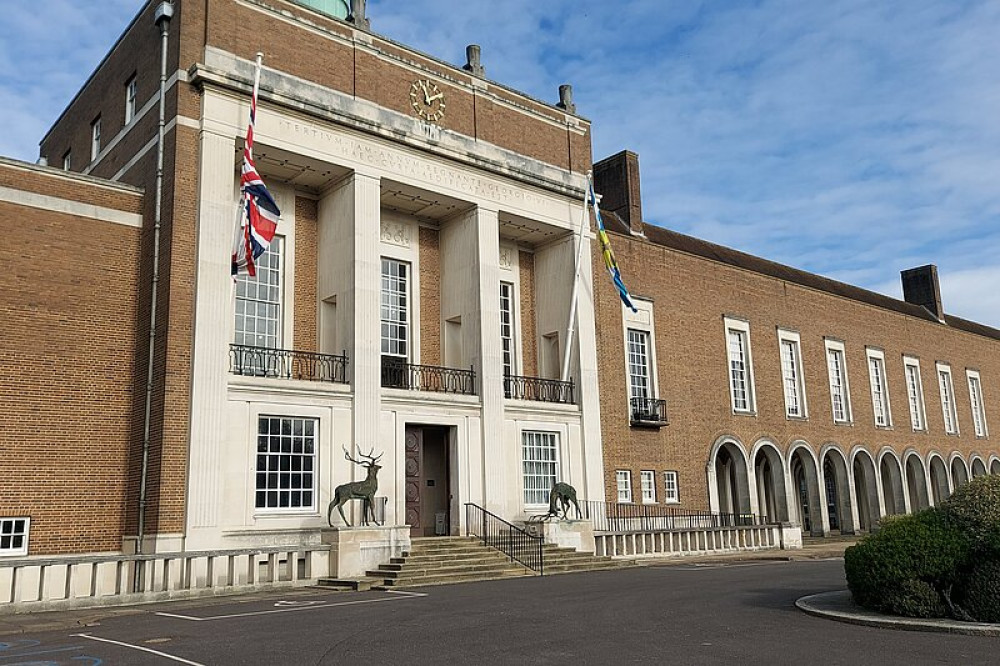


Highways officials are struggling to cope with the amount of correspondence they receive, as increasing numbers of residents turn to AI tools to help them.
In the past month, the county council's highways teams received 3,000 pieces of correspondence.
In many instances, the communications – some drafted by AI – are said to have become "more detailed, more extensive and more complex".
And even though officials say they dealt with 93% of communications within five working days in October, it is now said to be "causing capacity issues" for the highways team.
Executive member for highways Cllr Stephen Giles-Medhurst highlighted the issue at the latest meeting of the council's highways cabinet panel on Thursday (November 12).
Cllr Giles-Medhurst said that the correspondence was becoming "longer, more detailed, more extensive and more complex".
And despite acknowledging that not all correspondence was AI-generated, he suggested that the increasing use of AI was clearly "a contributing factor."
And he questioned how the council could address the impact of AI, and the "capacity issues" it was causing.

Detailing the increase in correspondence, he said the number of enquiries lodged by councillors had increased from 180 a month to 300 a month.
And he said the number of "overall interactions", which includes correspondence, fault reporting and licence applications, had now reached 3,000 a week.
In response, Cllr Matt Cowley (Conservative, Harpenden South West) acknowledged that AI customer correspondence was "a real problem".
More generally, he suggested that AI didn't always interpret correctly what a resident wanted to say, leading to a resident receiving a response that didn't answer their question.
But he also acknowledged that AI could also be helpful in triaging communications and drafting initial replies.
And he asked what the council had been doing to try and take advantage of these advances in technology.
Cllr Alistair Willoughby (Labour, Baldock and Letchworth East) suggested that AI was a way for some residents to raise things that they wouldn't otherwise be able to.
That was echoed by Cllr Michael Blisset (Reform, Hatfield East), who suggested the increased engagement with the public was "a good thing".

And he suggested the use of AI was "a bit of an equaliser for people who are perhaps not confident or articulate around generating a complaint".
At the meeting, group manager (customer journey and locality) Stuart Reynolds stressed that whilst the team was "at capacity", 93% of cases were responded to within five working days in October.
He pointed to queries that may have been a paragraph in the past now running to five pages, with prompts left on communications that show they have been generated by AI.
He said officers were also using AI "to help streamline our activity". He said that because of the amount of communications, they were now "reliant" on template answers, which they then adapted.
The issue was highlighted at the latest meeting of the county council's highways cabinet panel (November 12), which can be viewed at www.hertfordshire.gov.uk
Download our Nub News App:
- It’s FREE and available now
- Breaking news notifications
- Your Town in Your Pocket


Share: