

Inside Hertfordshire’s biggest shake-up for half a century
By Christopher Day - Local Democracy Reporter 15th Dec 2025


In November, councils across Hertfordshire decided how they want the county to be divided in the biggest shake-up of English local government for 50 years.
The issue divided parties, sparked accusations of political gameplaying – and even led to one council leader being removed from office.
This story gives you the inside story of how Hertfordshire got here.
It starts in earnest last December, when the Government published its plans for devolution and local government reorganisation (LGR).
Every part of the country that has an upper two-tier system of local government – such as Hertfordshire – was told to begin preparing plans to reorganise it into unitary councils.
Rather than services such as road maintenance, education provision and rubbish collection being split between the county council and district or borough councils, unitary authorities will take responsibility for all local government services within the area they cover. The county council and district and borough councils will be abolished.
At the same time, the Government confirmed its ambition for new mayoral strategic authorities to be created. These new authorities, operating over a broader area than the unitary authorities, are led by a directly elected mayor and are given powers and funding to work on areas such as transport, police and crime, and infrastructure investment.
You have to go back to 1972 for the last LGR on this scale, when Hertfordshire's patchwork smorgasbord of authorities was simplified into the current system of the county council and 10 district and borough councils.
Download our Nub News App!
- It’s FREE and available now- Breaking news notifications
- Your Town in Your Pocket


Since last December, Hertfordshire's 11 councils have been working on proposals for how the county could be best served by reorganisation and devolution.
They were told initially that the Government's aim was for new unitary councils to cover populations of at least 500,000 while the "default assumption" for mayoral strategic authorities would be a population of at least 1.5 million.
Given Hertfordshire's population of around 1.2 million, that suggested between one and three unitary councils, and potentially joining with another area to create a suitable mayoral authority.
The leaders of all 11 councils, as well as the police and crime commissioner, have met at the Hertfordshire Leaders Group on a regular basis to discuss the best way forward for the county.
Chairmanship of those meetings rotated between the councils, with Richard Henry (Lab, Stevenage) taking charge in the early stages before it automatically switched to Stephen Giles-Medhurst (Lib Dem, Three Rivers) in summer this year.
Cllr Henry says his overarching aim from the off was to ensure the county's leaders remained together. "We wanted to signal to Government that the Hertfordshire leaders work collegiately across political boundaries for the benefit of all Hertfordshire residents," he says.
In those terms, the process appears to have been a success. The 12 politicians around the table – five Liberal Democrats, four Labour, two Conservatives and one Green – agreed to make a joint submission to Government last month with their three proposals for LGR in Herts.
That cross-party collaboration has persisted despite the different attitudes towards the process of reorganisation.

Some, such as Daniel Allen (Lab) in North Herts, believe it will see residents better served than under the existing system.
Others, such as Jeremy Newmark (Lab) in Hertsmere, say reorganisation will provide "very clear improvements" in some areas, including by making "financial efficiencies", but could bring "deterioration" in other areas, like planning.
And others still, generally non-Labour leaders, have expressed discontent that the process is happening at all, such as Corina Gander (Con, Broxbourne), who says the leaders have had to "work with whatever we are given".
The general approach of the 11 leaders has been a contrast with other parts of the country, such as in Devon, where councils and leaders have sometimes found themselves engaged in public disputes over the best way forward. All of Hertfordshire's leaders have spoken with pride about their commitment to working together rather than descending into arguments.
Early on, ideas floated for the county included a single unitary authority covering all of Hertfordshire as well as various combinations of two or three unitaries.
The single unitary idea was supported by Richard Roberts, who was Conservative leader of Hertfordshire County Council (HCC) until May this year, when the Lib Dems took control of the authority.
It had initially been raised as a possibility in 2020 by the then HCC leader, David Wiliams (Con), who commissioned consultants to look into the idea – but it was strongly opposed by district and borough council leaders and so the proposal had been scrapped.
When the prospect of a single unitary was raised again by Cllr Roberts last year, the district and borough council leaders came together again to oppose it. All 10 released a public statement that they did not support a single unitary.

It was confirmed as being off the table altogether in May when the Lib Dems became the largest party at the county council elections and the new county council leader, Steve Jarvis, made clear his opposition to a single unitary.
For Max Holloway, Labour leader of Welwyn Hatfield Borough Council, taking the idea of a single county-wide unitary off the table was a "unifying moment" for the Herts Leaders Group that gave them "something helpful to rally around".
In the months between the Government's December 2024 White Paper on local government changes and the May elections, the possibilities for splitting up Hertfordshire had broadened.
Cllr Henry says that when he first "floated the idea of smaller unitaries" he was told it "wasn't what the Government wants". But, he says, that messaging gradually became "softer … and we were told that if we made the case for unitaries with populations of 250,000 to 300,000, it would be considered."
It meant options for dividing the county into as many as four unitaries could now be on the table.
In another area, though, the Government was less flexible.
Cllr Newmark looked at the possibility of Hertsmere forming some kind of authority with London boroughs, but was told by ministers and senior Ministry of Housing, Communities and Local Government (MHCLG) officials that it would not be possible and that reorganisation should be within county boundaries. And, according to Cllr Gander, Broxbourne was open to considering the possibility of joining with Essex until the Government ruled it out.
Leaders elsewhere in southern Hertfordshire had less interest in looking across county boundaries. Cllr Giles-Medhurst (Three Rivers) says he would have been "strongly against" the idea of joining with any London boroughs, and Peter Taylor (Lib Dem, Watford) says it "wasn't something we spent a lot of time looking into".

Initially, dozens of options for dividing up Hertfordshire were put on the table. Splitting the county into northern and southern halves was considered, as were configurations for three- and four-unitary options. According to Cllr Newmark, "there were informal votes involving first, second and third choices around which centres of gravity started to emerge".
By March, an interim submission to Government had narrowed down the possibilities to five options: a single unitary, a two-unitary model splitting the county in half, two different three-unitary options and a four-unitary model. At the time, the aim was for the process to result in a "single proposed option" by November, when the final submission to Government had to be made.
One of the three unitary options was removed in the ensuing months, as well as the single-unitary option, with three final proposals brought forward for two-unitary, three-unitary and four-unitary options.
The leaders knew that every model would be judged against the Government's six criteria:
- Provide a single tier of local government
- Be the right size to achieve savings and withstand financial shocks
- Offer high-quality and sustainable public services
- Collaborative working between councils to agree a locally informed proposal
- Support for devolution, i.e. mayoral strategic authorities
- Enable stronger community engagement and neighbourhood empowerment
Cllr Jarvis said it was a "pity" the leaders were not able to agree on a single option to put to Government and added that the Herts Leaders Group meetings were "not always as decisive as I'd have wished them to be".
"Once the Government said we could submit multiple options, the impetus to do that disappeared – but I still think it's regrettable that we didn't manage to do that," he says. "It would have involved some compromise, but it would have meant the effort could be put into working on a smaller number of options."
Council leaders are generally agreed that their meetings – initially held monthly, increasing to fortnightly and then weekly as work on reorganisation reached its busiest point – were largely constructive as they hammered out their proposals for Hertfordshire's future.
Ben Crystall (East Herts), the sole Green at those meetings, said they have been "even-tempered and very fair-minded and balanced on the whole", though he adds that there had been "frustration" amid the "positive" atmosphere.
Cllr Giles-Medhurst took over as chair and said his "core aim was to keep all 11 authorities on the table together" – an objective he achieved – while his party colleague, Peter Taylor, elected mayor of Watford, said there had been a "collaborative" approach to the issue.
Cllr Henry says the discussions were "very frank and open" and had been "difficult at times" but were supported by a shared commitment to "working together" and an overarching goal of "playing nicely together".
In the view of Cllr Newmark, working together was made easier by Hertfordshire's "slightly unique orphan status" on devolution, where there is "a lack of a regional partner for a strategic mayoral authority".
"It's … that bit more important that we were able to demonstrate to Government that we're going about this process with a certain baseline level of co-ordination," he says.
Cllr Gander, who took over as Conservative leader of Broxbourne Borough Council in May, said the leaders had been able to "brush politics aside and focus on doing what's right for residents" and is hopeful it will mean a smoother process as reorganisation proceeds.
By September, the leaders had alighted on the three options they wanted to be on the table, described as "compromise" solutions by Cllr Crystall.
The two-unitary option would split the county into Western and Eastern halves, with each new authority serving a population of around 600,000 with 117 councillors.
The three-unitary option would create Eastern (Broxbourne, East Herts, North Herts, Stevenage), Western (Dacorum, Three Rivers, Watford) and Central (Hertsmere, St Albans, Welwyn Hatfield) authorities. Each would serve a population of between 350,000 and 480,000, and there would be a total of 234 councillors across all three.
And the four-unitary option would establish Eastern (Broxbourne, East Herts, part of North Herts), Central (North Herts, Stevenage, Welwyn Hatfield), South Western (Hertsmere, Three Rivers, Watford) and Western (Dacorum, St Albans) authorities, each with a population of between 290,000 and 320,000. There would be a total of 327 councillors across all authorities in that configuration.
Residents were consulted on each option in the summer, though, according to Cllr Giles-Medhurst, "it was specifically a decision of all the leaders … that we wouldn't specifically ask residents to vote on each of them".
But many of the 7,500 respondents did express a preference: Cllr Giles-Medhurst said at a council meeting that 1,170 wanted four unitaries, 979 wanted three and 907 wanted two unitaries. There were also 60 respondents who indicated a preference for three or four, and 47 who indicated a preference for two or three.
Some, however, have suggested the consultation responses should be viewed sceptically, given the very limited information available to residents at the time – no information about the costs and savings of each option was available, for example – and the very low percentage of residents who provided any response at all, at around 0.61% of the county's population.
Council officers were, in the meantime, beavering away to produce financial modelling for each option, based on a shared set of data.
That modelling, published in November, showed that the two-unitary model could be expected to make savings of up to £418 million in the first 10 years, compared to up to £124m for the four-unitary option. The three-unitary model fell in between, with predicted savings of up to £258m.
It crystallised the issue of reorganisation, in the minds of some, as a trade-off between greater local democracy versus greater cost savings.
Some leaders gave a prominent place to the financial forecasts, such as Cllr Jarvis, who warned that the predicted first year £22m budget deficit for a Central Hertfordshire authority in the four-unitary model could leave it "bankrupt", and Mr Taylor, who said: "It's in nobody's interest to create councils that are going to declare themselves bankrupt a few years down the line, so we've got to look really carefully at the evidence around that."
But others emphasised the limits of the modelling, which could not take account, for example, of the Government's upcoming Fair Funding Review that will determine the shape of local authority funding in the medium term.
Cllr Newmark said the modelling should be taken with "a very serious pinch of salt". He added: "These numbers are largely … informed guesswork."
All the work behind the scenes to put together Hertfordshire's submission to Government has cost money – and will continue to do so as the transition process progresses. The Government has so far provided £378,000 to support Hertfordshire's councils in developing proposals, but this is well below the actual cost of the work being done by council officers.
Cllr Jarvis reckons more than £1m has already been spent across the county, and Cllr Giles-Medhurst believes the cost of preparation work could total as much as £20m across the 11 councils, including roughly £1m at each district or borough council. He says: "We have a robust budget in Three Rivers … so we're able to cope with that, but I'd rather spend it on local services than spend it on local government reform."
With a deadline of November 28 for submitting Hertfordshire's proposals to Government, the final month or so saw both publication of that financial modelling and meetings at all 11 councils to decide which option they would formally back.
Legal advice said the decision should be taken by each council's cabinet, though each authority would also hold a discussion of the topic at a full council meeting. Some, but not all, councils would take an indicative and non-binding vote at full council. According to Cllr Allen, then leader of North Herts Council, and Cllr Crystall, leader of East Herts Council, the cabinet decisions could not be "predetermined".
The manner in which the decision would be made by each council was highly unusual. Decisions are usually taken either by the cabinet without discussion at full council, or by full council after discussion at cabinet, not the other way around.
At some councils, this unusual order of proceedings had little impact on events. In Stevenage, for example, where Labour hold 27 of the 39 seats, there was never likely to be a conflict between the views of council and the views of cabinet.
But for minority and coalition administrations in Dacorum, East Herts, North Herts and Welwyn Hatfield, it raised questions about the legitimacy of decisionmaking, who had the mandate to make a decision and where power lay. Should the mandate come from the small percentage of residents who completed a consultation, from the full council or from the cabinet?
In Dacorum, the minority Lib Dem administration wanted to go for the two-unitary model, but was outvoted by those – including the Conservative and Labour groups – who supported the four-unitary option. The council leader, Sally Symington, took the decision to go with the vote of full council and sign off on the council formally backing their preference, rather than her own.
Every other leader faced with a similar dilemma took a different course.
In Welwyn Hatfield, where a Labour and Lib Dem coalition is in power, Cllr Holloway and his Labour cabinet colleagues forced through the four-unitary option despite full council preferring the three-unitary model. None of the Lib Dem cabinet members voted with Cllr Holloway at cabinet.
And, in East Herts, the Green and Lib Dem coalition's cabinet went for the three-unitary rather than the four-unitary option preferred by full council – though the full council result, which was won by five votes, was perhaps skewed by the six cabinet members who chose to abstain.
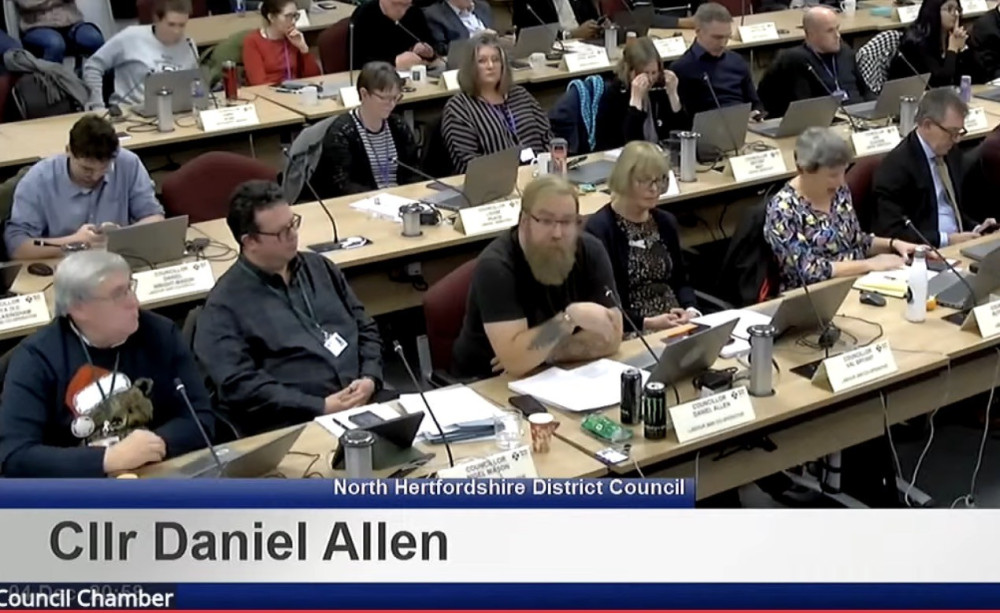
Most dramatically, in North Herts the leader of a Labour minority administration, Cllr Allen, backed the four-unitary option rather than council's preference for the two-unitary model. He had been warned in advance by the Lib Dem and Conservative groups he could face a vote of no confidence if he did so, and so it proved, with Cllr Allen removed as leader at the next full council meeting.
He argued he was representing the wishes of residents and doing what he believed was right for North Herts; his critics said he was ignoring the will of elected representatives who were entrusted by the electorate to use their judgement.
In the end, six councils – including councils with Labour, Lib Dem and Conservative leaders – backed the four-unitary option while three supported the three-unitary model and two favoured the two-unitary option.
Their reasons for backing the different options varied. Cllr Crystall felt the three-unitary model was the "least worst" option for East Herts and would avoid creating a new unitary with a small population spread over a large area in the four-unitary option, or a "county council-lite" authority in the two-unitary model.
In Broxbourne, Cllr Gander went for the four-unitary option on the grounds that it offered "the best opportunity to provide local identity, strengthen local decisionmaking and ensure our communities have a strong and distinct voice".
The same option was backed by Cllr Allen in North Herts, who said it would give the best "representation of residents". He added: "I would rather see proper representation of our residents than massive savings."
In Dacorum, Cllr Symington supported the two-unitary model, taking the view that other options risked bringing about "higher council taxes than are strictly necessary". The conversation there also saw local considerations take a prominent role; there was a general consensus that the three-unitary option should be avoided because it would risk splitting the new Hemel Garden Communities development between two different authorities.
Perhaps inevitably, accusations of political gameplaying were levelled at all of the major parties across the county.
It was noted by some, for example, that Labour leaders in North Herts, Stevenage and Welwyn Hatfield all backed the four-unitary model, which would bring those three authorities together as part of a new Central Hertfordshire authority. All the Labour leaders maintain that they voted for the option they believe will best serve their residents.
In the west of the county, Lib Dem leaders in Three Rivers and Watford voted for the three-unitary model that would join them with Dacorum, another Lib Dem council, while the two-unitary model backed by Lib Dems at county council would create a Western unitary covering an area where all five existing councils have Lib Dems involved in the administration. All the Lib Dem leaders maintain they voted for the option they believe will best serve their residents.
The Conservatives, meanwhile, walked out of a county council meeting because they were not allowed to vote against the reorganisation.
It led to accusations from Cllr Jarvis that the Tories had "voted in the way they thought would be most difficult in each council" – in councils such as Dacorum, North Herts and Welwyn Hatfield they had voted in a way that meant the preferences of the leaders of those councils were outvoted at full council.
Others suggested the Conservative walkout could have been a convenient way of avoiding having to vote in different ways at district and county levels.
The leader of the county council's Conservative group, Cllr Roberts, insists there is "no truth whatsoever" to claims that his party's representatives tried to be "difficult". He said his party's groups around the county had gone with their "genuine group view" and had done what they believed was right for their residents.
The Conservatives were not alone in managing to avoid voting in different ways at different councils.
The county council's Lib Dem cabinet voted for the two-unitary model, but Cllr Giles-Medhurst – who supports the three-unitary option – was not present for either the extraordinary council or extraordinary cabinet meeting. He said the meetings had been called after he had "other commitments" in place.
Peter Taylor also supported the three-unitary option and did not attend the extraordinary council meeting. He said only that he was "not able to attend" and declined to elaborate further when asked.
One Lib Dem who did vote differently at different councils was Paul Zukowskyj, who voted for the three-unitary option at Welwyn Hatfield but for the two-unitary model at the county council's cabinet. He said that "as a democrat" he felt he had no option at the county council but to "follow the will of the full council".
The only party not to openly show divided views on their preferred model for Hertfordshire has been Labour. Across the county, every Labour group to express an opinion voted for the four-unitary model.
In North Herts, Lib Dem councillor Dominic Griffiths suggested this may not be "sheer coincidence", while Conservative Steven Patmore accused Labour of putting "party instruction" above what is best for residents.
There were rumours that Labour East had wanted their party's councillors across Hertfordshire to back the four-unitary model. One Labour source told the Local Democracy Reporting Service there had been "really clear pressure" on councillors from the "regional and central party" to vote for the four-unitary option.
They added it had been "suggested" those who failed to vote for that option "would not be in line for selections for the new authority".
Another Labour source suggested there is a "virtue" in the party presenting a united front. "It's not good politics to have people voting for different things in different places," they said.
Labour council leaders, however, deny they faced pressure from Labour East and all say they came to their own conclusion as to which option would best serve the residents they represent.
Cllr Henry says Labour council leaders in Hertfordshire agreed the four-unitary option was preferable and informed the regional party of their preference; while Cllr Allen says Labour East "explained why they felt the four-unitary option was the best" but adds: "I wouldn't have cared what they said because I felt that option was the best."
In Essex and Cambridgeshire, both areas within the Labour East region, Labour-led councils did back different options for LGR.
And Cllr Newmark, an early supporter of the four-unitary model, said he believed Labour-led authorities in Hertfordshire had backed that option "because smaller units of local government are a natural Labour position". For Cllr Holloway, voting for the four-unitary model in Welwyn Hatfield was a "values-based" decision, looking at the "closeness of service and local democracy" to residents.
Reform UK councillors took different approaches in different parts of the county, though there was a clear undercurrent of frustration with the process itself.
In Hertsmere, for example, Caroline Clapper said time spent on reorganisation was time "taken away from delivering vital front-line services that actually make a difference to our residents". And, in East Herts, Graham McAndrew said the Government should have considered new councils across county boundaries, suggesting East Herts has more in common with Harlow, Uttlesford and Epping Forest than other areas in Hertfordshire.
As with many full council votes, all parties (save for the Greens) whipped their councillors in some authorities to present a united front within their respective groups, though these often came after internal debate on which option to back.
While there were exceptions to this – the Lib Dems in Dacorum and Three Rivers, for example, did not impose a whip on their members – it was rare across the county to see open divisions within groups on which option to support.
Independent councillors, of course, were not subject to party whips and could vote with their conscience. Their votes across the county show a wide range of opinion too.
Emma Rowe in North Herts opposed the four-unitary model on the grounds it would "break up natural communities" and be "financially unsound", but Jan Maddern in Dacorum thought the same option was the "least bad" of those on the table because she believes it would retain a closer connection between residents and their council.
Still another view was taken by the Hertsmere First independent group, who backed the two-unitary model. Their leader, Marc Amron, said that model would "provide the best economies of scale" and "real opportunities for service transformation".
An irony of the political melodrama is that a significant question mark lies over whether the decision of each council on which option to back will have any impact on the Government's decision as to how Hertfordshire will be reorganised.
Will the fact that six of 11 councils preferred the four-unitary option hold weight? Or will the Government, as it has in Surrey, proceed with an option that was not the most popular among authorities in the area being reorganised?
Most leaders say they don't know how much weight the views of Hertfordshire's councils will hold with Government. Cllr Holloway says he "would like to think that local preference would have a role to play in it," and Cllr Newmark says MHCLG ministers he spoke to had stressed that "they don't want to do LGR to local areas, they want local areas to use their local knowledge to develop the best solutions … and they will attach significant weight to local feedback".
Others think the Treasury could hold sway when the final decision is to be made, while Mr Taylor suggests it's "really hard" to know the basis on which the Government will make its decision. He believes it will not be "as straightforward as more councils wanting a particular model therefore that's what will happen".
Donna Wright, a Labour cabinet member in North Herts, said at a recent meeting that the views of her and her colleagues have "no influence" over the Government's decision. "Whether cabinet followed public opinion, the council vote or our own judgement, it may well make no difference," she said.
There's no guarantee the Government will even stick with the options the Hertfordshire leaders have put on the table.
It's possible a different configuration entirely could be reached, rather than one of the current options; and multiple leaders have warned if the Government plumps for the two-unitary model there is a possibility it could slash the number of councillors from the proposed 117 to a maximum of 100.
The latter possibility is a concern for Cllr Giles-Medhurst, who warns it would mean unitary councillors would have to work a "full-time job".
If that were the case, he said: "You're not going to get young mums doing it, you're not going to get 20-year-olds doing it. Unless the Government's going to say all elected councillors are going to be paid £50,000 – and I haven't yet seen that pig flying – we're going to end up yet again with older, white males."
The wait now is for spring next year, when a formal Government consultation on the proposals for reorganisation will be held, ahead of a final decision in summer next year.
Elections to the new unitary authorities – initially 'shadow authorities' without meaningful power – would then take place in May 2027, before they take over from the existing councils on Vesting Day, 1 April 2028.
In the meantime, Hertfordshire's councils will not be standing still. Work on the transition process will continue, as will the continued provision of services for the next three years.
Then, too, there is the small matter of looking towards a mayoral strategic authority that could sit above the new unitary authorities.
Cllr Jarvis wrote to Steve Reed, the Secretary of State, in November to express his hope – and the hope of the Hertfordshire Growth Board, which includes leaders of all 11 Herts councils – that a mayoral strategic authority for Hertfordshire could be created "as soon as possible".
His view is that a county-wide mayoral authority would be the "right sort of scale", rather than one that stretched into any surrounding areas. With London having its own existing set-up, Cambridgeshire already having a strategic mayor and Essex set to have one from next year, the options for working with somewhere else were "fairly limited", Cllr Jarvis says, though both he and his predecessor, Cllr Roberts, had "conversations" with other leaders.
What would Hertfordshire gain from a mayoral authority?
Cllr Jarvis says: "The Government's funding model essentially means funding for growth, funding for significant transport improvements, those sorts of things, goes down the mayoral strategic authority route. If you don't have one you miss out – and we don't want Hertfordshire to go on missing out."
Cllr Jarvis and Cllr Henry, among others, want any new mayoral authority to be ready to go alongside the new unitary authorities in April 2028.
But, a month on from sending his letter to the minister, Cllr Jarvis is still waiting for a response. "The Government's apparent declined interest in the bit of the process that actually delivers for people is disappointing," he concludes.
Cllr Giles-Medhurst, similarly, says the Government has "gone very, very silent on this", while Cllr Roberts believes "mayors have gone backwards" and the "Government doesn't have a properly, fully formed plan about how to do this".
Cllr Crystall says there has been "a lot of uncertainty" around the processes of both LGR and devolution, and reels off a list of unanswered questions: "How will the mayor work with the leaders of the unitary authorities? Will it be a democratic process or will the mayor be in charge? How will the mayor be elected? How do we deal with democratic decision making at the lower end, at the towns and the parishes, and the areas that are unparished? What will planning look like for communities in East Herts?
"It feels like we're trying to navigate the biggest change for 50 years but partially blindfolded and without any real power," he concludes.
For now, then, it's a waiting game on both LGR and devolution. The number and nature of the councils established on Vesting Day in 2028 remains to be seen.
Download our Nub News App:
- It’s FREE and available now
- Breaking news notifications
- Your Town in Your Pocket
Share: