


‘Screaming’ red risk that local government reform could impact on services
By Stewart Carr - Local Democracy Reporter 2nd Apr 2026
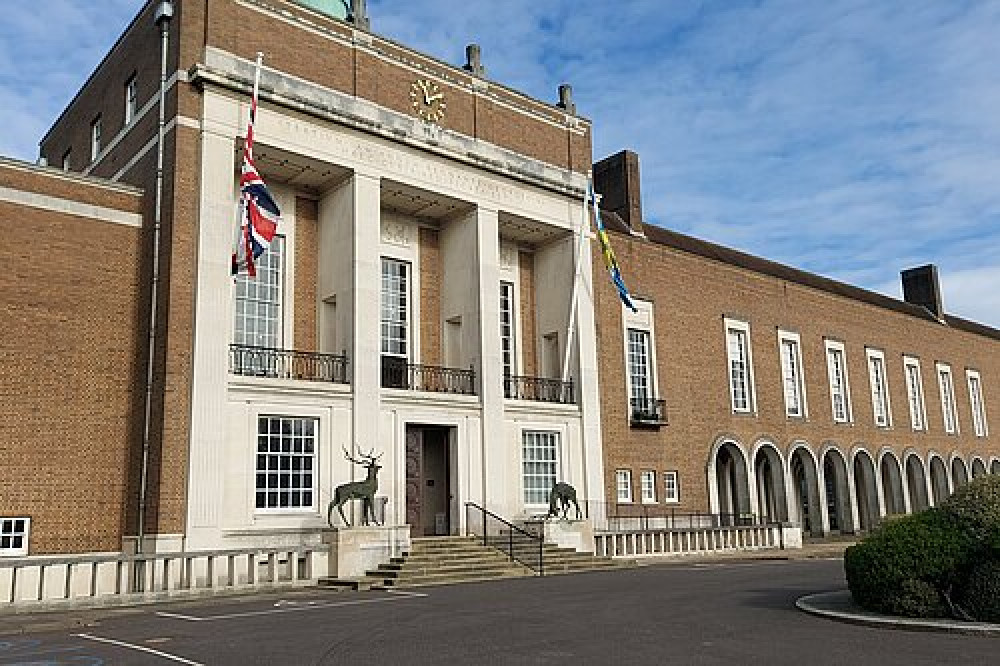


Plans for sweeping changes to local government have led to a "screaming" red risk of the impact on delivery of services to Hertfordshire residents, a meeting was told.
Hertfordshire County Council's audit committee met on Friday, March 27, where members were presented with a risk focus report on local government reform, which was marked as red – meaning "severe" – with a high score of 20.
The meeting heard there could be conflicts as the county council's resources are divided between up to two, three or four replacement councils; with a need to hire experienced executive heads of departments in each of the new local authorities.
In his report, Alex James, head of corporate strategy and policy, reminded members that the current government set out its plans to reorganise two-tier areas in its English Devolution White Paper in December 2024, with affected councils required to submit their proposals.
Among those is Hertfordshire, which has an upper tier county council, as well as 10 district and borough councils.
Hertfordshire councils, along with Hertfordshire's Police and Crime Commissioner (PCC) Jonathan Ash-Edwards, jointly submitted the county's reorganisation proposal on November 28 last year. This included three different options for two, three or four unitary councils in Hertfordshire.
A public consultation on each of the options ended on March 26, and Steve Reed, housing, communities and local government secretary, will announce this summer which option will be implemented in Hertfordshire.
The report stated: "Due to the scale of change, complexity and timescales associated with local government reorganisation and devolution, there is a risk that without adequate organisational capacity and resources the required changes may not be delivered effectively, resulting in impacts on service objectives and service delivery for residents."
Download our Nub News App!
- It’s FREE and available now- Breaking news notifications
- Your Town in Your Pocket


During the meeting, Mr James told members that, in the last few days, Mr Reed had announced his decisions in the devolution priority areas of Essex, Hampshire, Norfolk, Suffolk and Sussex.
Mr James said: "As such, it was announced that Greater Essex will now be forming five unitary councils.
"Hampshire, including the Isle of Wight and the unitaries in Portsmouth and Southampton will also be forming five unitaries.
"In turn, it is also proposed to have three unitary councils in Suffolk and another three in Norfolk as well.
"One area that was part of that programme, Sussex, the Secretary of State was unable to make any decision. But we understand that a further consultation is to be held on a revised proposal in that area. This follows the previous decision to form two unitaries in Surrey as well.
"The Secretary of State has stressed that those decisions in each area have been made on a case-by-case basis and on their own merits, in respect of the differences of local circumstances. While the announcements are of interest, they do not determine the outcome for Hertfordshire."
Mr James also reminded councillors of plans to form a single strategic mayoral authority in Hertfordshire.
Cllr Richard Roberts (Conservative, Kings Langley), who served as leader of the council until last May, said: "Where to start. I think in July 2024, when Angela Rayner invited leaders to express interest in mayoral devolution, mayors right across the country, would Hertfordshire like a mayor? The next day, we sent back a reply, 'Yes, we'd love a mayor, thank you very much, great!'

"Then comes the Devolution White Paper. Less about mayors, more about how we're going to break up local government and reform it. The debate about what size that should be in Hertfordshire and multi-party solutions in two, three and four supported by various councils in various combinations.
"In recent months, we've had a move away completely from the mayoral model, and so it's local government reorganisation. We're looking at a foundation status which was on the cards five or six years ago, the old Level 2 type deal."
Under devolution, a Level 2 deal in England is a county deal that transfers powers to local authorities – such as county councils or combined county authorities – without a directly elected mayor.
Cllr Roberts went on: "So, a real kick in the teeth, a real insult I feel to Hertfordshire and its ability to deliver on behalf of the people of Hertfordshire and the contribution to the country as a whole.
"The announcement came through that we are now breaking up relatively large counties into small councils, and not only that, the Government is breaking its own rules. It said it didn't want submissions where districts were broken up, as well as the counties.
"So now you've got the challenge of both putting together broken-up districts as well as broken-up counties, across multiple boundaries. That is going to add a higher risk to this process and not a lower risk.
"There also must presumably be a challenge around service delivery. Breaking Hertfordshire into two probably only means you have to find an extra set of executive directors and staff for one extra adult care service or children's service, or even a highways contract.
"With three [authorities] – you get the way we're going with this – or four or five… all across the country, there will be a massive demand for experienced staff to go into smaller organisations with less capacity, less resilience, less ability to cope with change, than if they'd been larger. And yet that appears to be the direction of travel.

"This for Hertfordshire, I think, is worrying, and the service delivery model is potentially worrying."
Cllr John Graham (Conservative, Potter's Bar East) said: "I'd like to echo what Cllr Roberts said, I'm looking at this risk, and it's severe 20. I can't imagine there is a risk any greater than what we're facing in this reorganisation.
"In this risk, there is not a mention of timing. When somebody decides what it's going to be, how long are we going to have to put in the changes that have been described?"
Cllr Steven Watson (Green, Ware South) questioned the risk designation, and said: "We're so near the top of the [risk] scale, it's like it's screaming. We haven't got any granularity beyond that, and I wonder if we need to recalibrate that, so that we can drill down and mitigate it as much as possible… rather than have it at the absolute worst.
"It looks like we're going to be in the position of making the best of a bad lot. We do need to be recalibrating to see how we can possibly achieve that."
Chairman of the committee, Cllr John Hale (Lib Dem, Colney Heath and Marshalswick) said: "I don't think recalibration is necessarily needed, because I think the people I have spoken to so far are in alignment with my own view. The council has one of its most significant risks here.
"For this committee, I'm anticipating this will be a standing item on each agenda until February or March 2028, when we will cease to be.
"I think we're going to have some issues of conflict management, as this goes on. Because when we look to split up areas, even if there are two unitaries, there will be a question of how to split resources. It might be clear in some cases, but in other areas it won't.

"We're going to have to be comfortable as an audit committee that there are good governance procedures around any decisions being made in this implementation, and be satisfied on that."
Download our Nub News App:
- It’s FREE and available now
- Breaking news notifications
- Your Town in Your Pocket
Share: