Using Vintage Football Audio for At-Home Dementia Reminiscence
By Katie Wilson 3rd Nov 2026
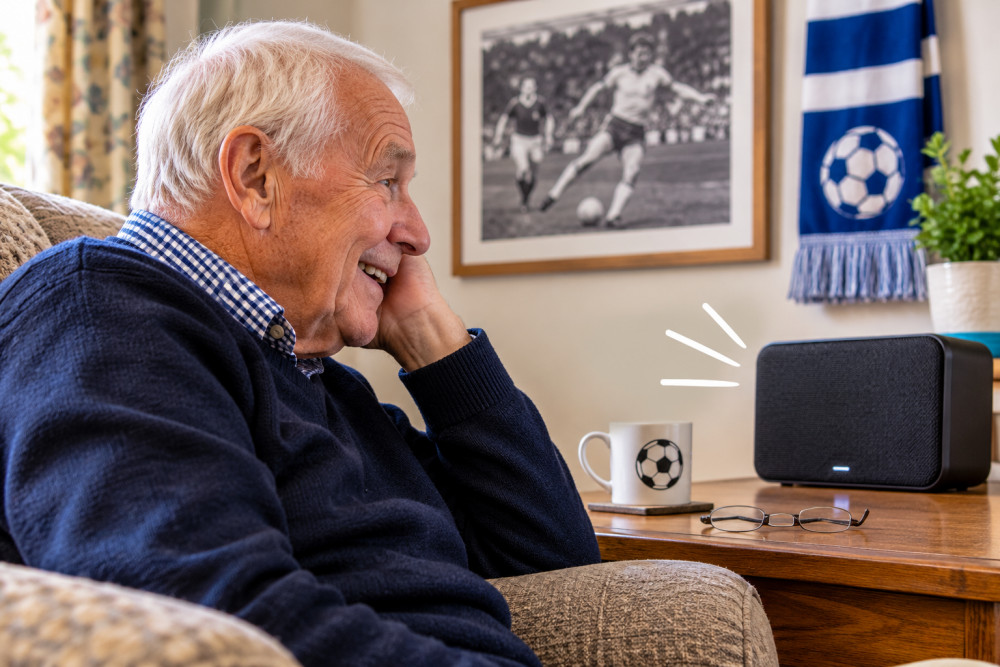


For a lifelong football supporter, matchday rituals—the roar of the crowd, the crackle of the wireless, and the legendary voices of radio commentators—form a core part of their identity. Decades spent following a single team build deep-seated emotional anchors, and when a loved one is living with dementia, recent memories often fade first while long-term passions formed in youth remain remarkably intact.
While fast-moving modern television can feel visually overwhelming, simple, indoor audio reminiscence offers a gentle, low-pressure way to bring back comfort, spark conversation, and share a quiet moment together on the sofa. By focusing specifically on your loved one's favorite team and their personal "golden era"—typically ages fifteen to thirty—you can curate a deeply comforting indoor experience that requires no special equipment or travel.
You can easily track down authentic vintage broadcasts and stadium soundscapes using free online platforms right from your phone or tablet. The BBC Reminiscence Archive (BBC RemArc) is a fantastic digital archive designed specifically for memory care, where you can select the sport theme and filter by decade to play authentic radio commentary clips.
Additionally, searching YouTube for your loved one's specific club along with classic commentary or stadium atmosphere audio provides endless material, though it is best to keep your device screen face-down while playing to ensure the focus remains entirely on the sound. Checking your favorite club's official community trust or foundation page can also reveal local heritage projects or audio collections tailored to lifelong supporters.
Setting up an at-home listening session is wonderfully simple and does not require a rigid schedule or long hours. Aim for a brief, cozy ten to fifteen-minute window during a quiet afternoon lull, perhaps starting with a minute or two of background crowd murmurs or an old matchday intro tune to set a familiar mood.
You can then play two or three short commentary clips of famous goals or historic wins scored by their team before letting a bit of post-match radio reaction fade softly as you sit together. Placing a small, warm-sounding Bluetooth speaker on a nearby table rather than using headphones creates a natural, room-filling wireless radio feel in your living room that everyone can enjoy comfortably.
The secret to successful home reminiscence is keeping the interaction entirely pressure-free by avoiding direct memory tests or quiz questions about who scored or what year a game took place. Instead, rely on open-ended, failure-free prompts such as noting how much a crowd roar sounds like a Saturday afternoon at the match, or simply expressing how comforting those old radio voices are. If your loved one starts talking over the audio to share a personal story or a memory from their own playing days, lower the volume and let them lead the conversation completely
To explore additional support, family carers can also utilize resources like the Sporting Memories Foundation for creative ideas, or reach out to the Alzheimer's Society Support Services for practical guidance and caregiver advice
Download our Nub News App!
- It’s FREE and available now- Breaking news notifications
- Your Town in Your Pocket


To get involved please email me at [email protected]
Download our Nub News App:
- It’s FREE and available now
- Breaking news notifications
- Your Town in Your Pocket
Share: