Number of empty primary school places across Hertfordshire tops 10,000
By Deborah Price - Local Democracy Reporter 1st May 2026
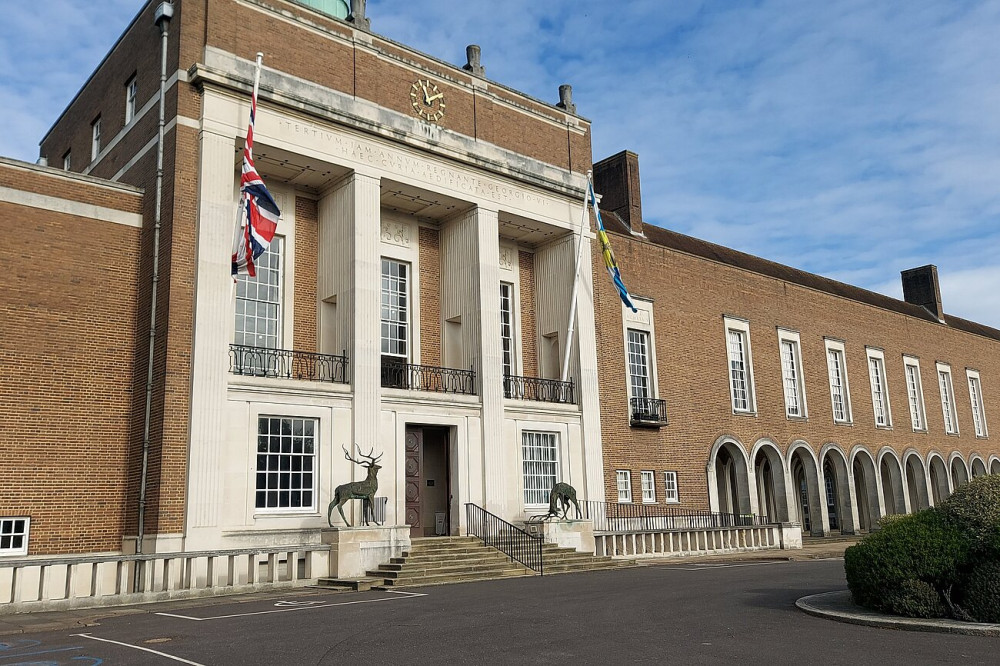


More than 10,000 primary school places are unfilled across Hertfordshire, according to the latest available data obtained by the Local Democracy Reporting Service.
The LDRS requested data on the total number of places available in each primary school year group and the number of those places that were filled.
Data supplied by the council suggests that of the 107,819 places available at the county council's 406 primary schools, one in every 10 of those places – or 9.87% – are unfilled.
That's 10,651 empty desks across the county's primary schools – or statistically equivalent to 25 two-form entry primary schools standing empty.
The data supplied by the county council was collected in the Spring/summer terms of the 2024/25 academic year.
Council officers stress that the number of surplus places varies from school to school, based on local populations and the popularity of individual schools.
And they say it is "good" to have some spare capacity in primary schools, offering flexibility to deal with unforeseen increases in pupil numbers.
Nevertheless, executive member for education, SEND and inclusion, Cllr Mark Watkin (Liberal Democrat, Nascot Park), says this "spare capacity" is already something that officers are looking at.
Download our Nub News App!
- It’s FREE and available now- Breaking news notifications
- Your Town in Your Pocket


And he admits that in some areas of the county, they may have to "look closely" at what they may have to do.
This could, he says, involve decreasing the number of places available at individual schools by reducing their published admission number (PAN).
But he refuses to be drawn on whether this could include school closures, which he says would always be a "last resort".
"We do have spare capacity, and it is something we will be looking at," he said.
"Officers have already identified certain areas where there is more spare capacity than others.
"And some further consideration may have to be given to what we need to do to address that.
"That may mean reducing pupil admission numbers. Or it might be necessary to take other action, such as federation.
"At this point, I am not suggesting we will be closing schools."

The number of unfilled places at a school can become significant because the funding a school receives is largely dependent on the number of pupils it has on roll.
And when pupil numbers sink too low, schools can be deemed to be financially or educationally unsustainable.
The council has already drawn up plans to close Albury Church of England Primary School and St Nicholas Church of England Primary School in Elstree because of low pupil numbers.
In a statement issued to the Local Democracy Reporting Service, a spokesperson for the county council acknowledges the impact surplus places can have on school finances.
But they say finances are only likely to become a significant issue if a school can no longer make good educational provision.
The statement also points to the uneven distribution of surplus places and the flexibility surplus places can offer.
"While the gap between theoretical capacity and actual pupil numbers might look large if you look at the county as a whole, in practical terms it means a typical primary class that would theoretically hold 30 pupils might only have 27 pupils," says the statement.
"However, the picture varies from school to school based on local populations and the popularity of individual schools.

"It's good to have some spare capacity in our primary schools, as it gives us some flexibility to deal with any unforeseen increase in pupil numbers, such as when we unexpectedly had to find places for children coming to Hertfordshire from Ukraine.
"However, with birth rates declining across the UK, we are seeing a year-on-year decrease in the number of children attending primary school in Hertfordshire, and that trend of lower pupil numbers looks likely to continue for the foreseeable future.
"Because the Government funds schools based on the number of pupils attending the school, this does have an impact on schools' finances. However, it is only likely to become a significant issue if a school is unable to continue to make good educational provision within the resources available."
In addressing the number of surplus places, Cllr Watkin highlights a "bulge" in pupil numbers around 2016, with the council then having to increase places to meet demand.
But he says that declining population trends suggest the number of surplus places in Hertfordshire primary schools is set to increase further.
According to the county council, the capacity data supplied to the Local Democracy Reporting Service was collected in May 2025, and pupil numbers are from the 2025 Spring Census.
According to the data, the total capacity for each primary school year group across the 406 schools is: Reception, 15,160; Year One, 15,251; Year Two, 15,363; Year Three, 15,446; Year Four, 15,496; Year Five, 15,511; and Year Six, 15,592.
And the actual pupil numbers are: Reception, 13,085; Year One, 13,446; Year Two, 13,998; Year Three,13,996; Year Four, 14,253; Year Five, 14,214; and Year Six, 14,176.

That means the highest number of empty places are in Reception and Year 1 – with 2,075 of the 15,160 available Reception places unfilled and 1,805 of the 15,251 Year One places still available.
Aside from Reception and Year One, the number of unfilled primary school places in other year groups ranged from 1,243 in Year Four to 1,450 in Year Three.
Download our Nub News App:
- It’s FREE and available now
- Breaking news notifications
- Your Town in Your Pocket
Share: